Friday, June 10, 2011

Rabid (1977)

Marilyn Chambers as Rose, "Typhoid Mary" for a new strain of rabies
Everybody has that fear that affects them like no other.  Other thoughts might make you uneasy, might get your heart racing, but there's that one that has a special place in your nightmares, that twists your stomach into knots and robs you of sleep.  For me, it's always been physical corruption.  A maniac with a machete is nowhere near as scary to me as a killer inside, attacking and transforming your very cells and rotting you away from within.  It's no wonder, then, that the early films of David Cronenberg, those labeled as "body-horror," or sometimes "venereal horror," are among my very favorite horror films.

Rabid, Cronenberg's second feature, tells the story of Rose (Marilyn Chambers) a young woman involved in a terrible motorcycle accident.  When the ambulance comes to whisk her away, none of the bystanders question the fact that it arrives so soon with no phone calls having been made.  And so it is that she's taken, not to a state hospital, but to a private plastic surgery clinic nearby, where the chief of surgery is all too eager to try out a new experimental technique.  It seems he's developed a process whereby skin grafts can be transformed into something like embryo cells, able to match the structures of nearby tissue.  Although the technique has shown considerable promise, there's also the risk of rapid tumor development, and so Rose is kept under observation for 30 days in an induced coma.

Frank Moore as Hart, Rose's erstwhile lover
The hospital is the setting for several satirical moments that establish Cronenberg's themes long before things inevitably start to go badly.  The patients in the clinic talk casually among themselves about the multitude of times they've gone under the knife.  A man talks about the latest work being done on his eyes, as though routine plastic surgery was as essential as regular check-ups.  A young woman says she's back to have another nose-job; apparently, her daddy thought she still looked too much like him after the last one.  All these people seem at best dimly aware that their bodies are incredibly complicated organic systems; they all see their flesh as lumpy clay from which they might sculpt something more perfect than human.

If that is the goal, then Rose is the realization.  She awakens in the middle of the night as almost an entirely new kind of being.  She rips the IV from her arm; it seems she no longer has the need for traditional sustenance.  Instead, her biological imperative is now centered on a new "organ" grown from the experimental tissue grafted on to her.  Under her arm is a tiny, grotesque orifice from which extrudes, in moments of passion or bloodlust, a phallic "stinger" with which she feeds.

The sexual or venereal overtone to Rose's mutations in unmistakable
Rose's new feeding organ doesn't just provide her with sustenance, it also spreads an infection to her victims.  Once "pricked" men and women develop delirium, sweat profusely, foam at the mouth, and eventually lapse into fits of irrational violence.  Worse, they can spread the virus through their own saliva, so what begins as a handful of isolated incidents quickly becomes a plague sweeping across Montreal (a clear inspiration for the "rage virus" in Danny Boyle's 28 Days Later.)

For all of the fantasy in its construction, Rabid is a remarkably prescient film.  The controversy which would erupt over the use of embryonic stem cells was still two decades away, and yet that is exactly the foundation of Rabid's transformational science.  Likewise, had it been release even a few years later, the sexual basis of this deadly plague would have made an AIDS allegory seem inevitable.

Montreal under martial law, as body disposal units drive by
The scope of this film is also stunning, given the miniscule budget Cronenberg had to work with.  Rabid was made largely with government grants; its final budget was less then one thirtieth of what he made The Fly with nine years later.  Yet, in an interview accompanying the film's DVD release, Cronenberg describes Rabid as his first "epic."  There are a tremendous number of characters here, with locations across Montreal and the surrounding countryside.  Most impressive of all are the scenes in the final act once Montreal is put under martial law.  Cronenberg uses well the resources at hand to depict a city caught between a deadly plague and an over-zealous and incompetent government response.

As the woman at the center of the plague, Marilyn Chambers does quite a good job depicting Rose's desperation to understand and to resist the new instincts driving her.  Although far from a world-class performance, there's a much-appreciated understatement to her take on the role that suggests she could have developed into an actress of reliable talent had she been given the chance.  It seems a real shame that the stigma attached to her participation in the adult film industry kept her from a legitimate acting career.

The rabies vaccine doesn't seem to be working
Rabid is not the best of Cronenberg's horror films; the 80's would bring genuine masterpieces seemingly every couple of years.  But as an early example of his favorite themes, it already clearly shows the talent that would make him, in the words of J. Hoberman, writing for the Village Voice, "film for film, the most audacious and challenging director in the English-speaking world."

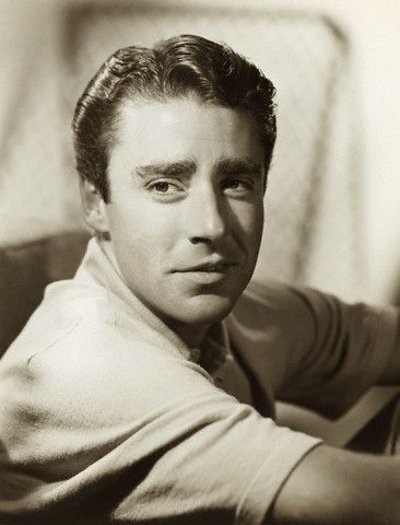
Men We Love: Peter Lawford

Thursday, June 9, 2011

His Majesty, The American (1919)

Douglas Fairbanks, looking rather pleased with himself.
His Majesty, The American***  was one of the last comedies Fairbanks made in the 10's, and also one of the most elaborate. The formula had hardly changed from his early Triangle Pictures releases: a robust and energetic young man must make his way (joyfully) through the world to win the hand of the girl of his dreams, through a series of contrived challenges that involve a lot of jumping and climbing on things. In this particular instance, the girl of his dreams happens to be his mother, who he has never met, but there's also a beautiful young princess on hand to fill the romantic gap this creates.

Wednesday, June 8, 2011

Second Chorus (1940)

Fred Astaire, Paulette Goddard, and Burgess Meredith.
The world of classic cinema is full of buried treasure. How many times have I watched a film only to wonder how it could have slipped under my radar for so many years? Suddenly this little movie I'd never heard of a week earlier I now can't imagine living without. That's the dream of course, and we do find them every now and then, but in spite of these rare fantastic discoveries, we don't really go scuba diving looking for sunken ships. We go diving to see the fish, or the way the sunlight dapples the water, or the coral formations. We go diving to see what we can see. We marvel over what our favorite performers did before or after they found or lost their stride, silent actors in talkies, strange experiments that didn't work.


Second Chorus is no life changing discovery, but while it belies the substantial talent of its principals, there's definitely enough punch left in the performances to make it an entertaining hour and a half. The script is far too weak to support the weight of its cast. There's not much of a plot, far too little music and almost no dancing,  and hardly any acting required from anyone involved. This may actually be something of an advantage for Fred Astaire and Artie Shaw, but the lovely Paulette Goddard and a shockingly young Burgess Meredith could have easily filled out more substantial roles, and character actor Charles Butterworth could, I am convinced, play anything you put in front of him.

Big Band films proliferated in the early 40's, and Artie Shaw was well set up to have a starring vehicle after his spectacular successes of the late 30's. This is not that film. Artie Shaw and his orchestra function in Second Chorus much like Baby the Leopard in Bringing Up Baby. The plot revolves around him, but you could also tweak the script a little so he never had to appear on camera and it wouldn't really change it much. The music sequences, such as they are, are neither well-filmed nor well-integrated, so they simultaneously do not seem to belong in the film and are not interesting enough in themselves to justify their inclusion on their own merits. The sounds Shaw milks out of a clarinet are stunning as usual, but need more visual punch in the stagings to hold them up on screen, and in this case it just isn't there.

Astaire himself cited Second Chorus  as his personal least favorite of his films, and while I haven't seen all of them yet, I imagine he wasn't far off. He plays a small-time college band leader, which sounds promising enough to start with. Personally I am really only prepared to accept Astaire in about four different types of roles: dancer, band leader, producer/promoter, or millionaire playboy. Anything too far beyond this falls a bit flat, like his abysmally unprofessional psychiatrist in Carefree. Of course, no one watches Fred Astaire to see him act, but unfortunately that's about all he does in Second Chorus. He has a paltry two dance numbers, in one of which we are expected to believe that he is simultaneously tap dancing, conducting an orchestra, and playing the trumpet, but even setting aside the plot holes it's a weak performance compared to almost any Astaire solo dance. "I've Got My Eye on You" from Broadway Melody of 1940, which was made the same year, shames this number to hell in a hand basket.

Fred and Paulette, having fun.
The other dance number in Second Chorus, however, is something rather special. It's a spontaneous little swing number with Paulette, who looks adorably leggy in a short flippy skirt. Certainly the technical difficulty is nothing much. Paulette is a charming actress and a very capable dancer, but set against Ginger Rogers, Rita Hayworth, Eleanor Powell, Cyd Charisse or even Judy Garland, her steps just don't stack up. But there's more going on here than just the steps. The pair twirl and tap around the set with an ease and fluency that make it a delight to watch. On top of this, the routine has a wry comic note to it, without being outright funny, that I have never seen Astaire quite hit with any of his partners after Ginger, but it was a big part of what made that pairing the stuff of legend. It sort of makes you think of all the films that could have been if anyone had had the foresight to see what seems so obvious to me now.

The absolutely delightful Charles Butterworth.
While I'm here, a nod of deepest respect is due to Charles Butterworth, for his performance as the music-loving, (talentless) mandolin-playing bottle cap magnate. His character is of course ridiculous, but Butterworth carries the role with dignity and somehow keeps him from being pathetic, reminding me somewhat of an aging Buster Keaton. There's nothing special or interesting about the part, but the performance is spectacular, and he all but steals the show.

Sometimes you really do find buried gold, but more often what you see is just a flicker of light and shadow, beautiful for a moment, but insubstantial. Second Chorus is by any objective criteria a terrible film, but that doesn't mean it's not worth watching.

Tuesday, June 7, 2011

The Station Agent (2003)

Peter Dinklage walking the right-of-way
I am curious to know whether 2003's indie drama The Station Agent has experienced a spike in sales or rentals since the debut of HBO's fantasy series Game of Thrones.  Peter Dinklage's performance in that series is the stand-out among a generally stellar ensemble, and is already receiving considerable Emmy buzz -- I can't be the only one inspired to go back and check out his breakthrough role.  I hope I'm not, anyway, as The Station Agent, although ultimately rather slight, is a terrific showcase for a truly remarkable actor.